Our policy for Wales
Many of our houses are vitally important tourist attractions, small businesses and employers in what are often fragile local economies in rural parts of Wales
Heritage means business
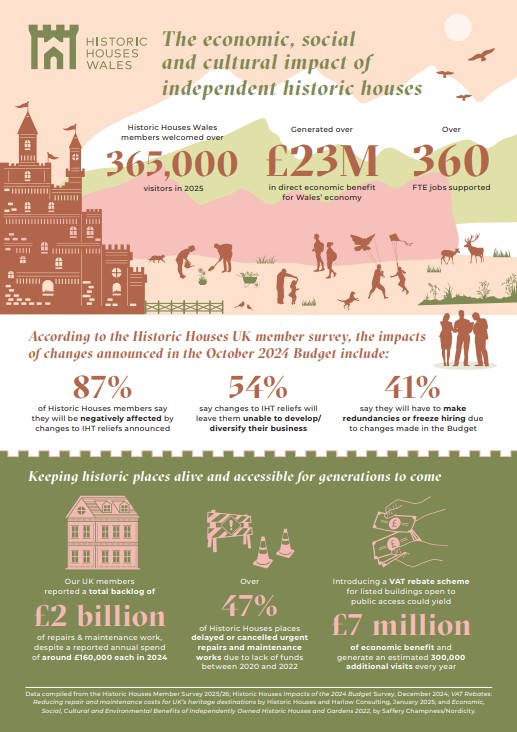
Historic Houses Wales represents almost 100 independently owned historic houses and gardens from every corner of Wales, including some of the country’s most iconic and historic places. In 2025, Historic Houses Wales members welcomed over 365,000 visitors, supported over 360 FTE jobs, and generated over £23 million in direct economic benefit for Wales’ economy. Many are important tourist attractions, small businesses and local employers in fragile rural economies.
A recent survey found that the most common challenges facing our members are the rising cost of doing business and increasing regulatory and tax pressures. Without supportive regulation and legislation, the custodians of heritage face an uncertain future.
Heritage supports health, wellbeing and local economic growth. The UK and Welsh Governments must recognise the cultural and community value of our irreplaceable historic houses and gardens by designing policies that allow them to thrive.
We are committed to working with the Welsh Government to create a policy environment that enables heritage attractions and regional economies to become more sustainable, and that encourages visitors to explore every corner of Wales.
Key policy asks:
1. Celebrate and empower Wales’ rich heritage
Wales’ remarkable heritage and history are central to national identity and safeguarding our historic places is essential to inspiring present and future generations. To protect this legacy, we must create supportive frameworks for the custodians of historic buildings to ensures that Welsh culture thrives.
2. Protect heritage from unnecessary regulatory burdens
Heritage relies upon a supportive fiscal and regulatory framework, so even small regulatory changes can have severe consequences. Over 94% of our members view the 182-day threshold for short-term lets negatively, as it is virtually impossible for small rural providers. The Welsh Government should fully assess the potential economic impact of proposed regulatory changes on heritage.
3. Support growth in Wales visitor economy
Heritage drives tourism and will be key to meeting the UK Government’s target of 50 million annual visitors, but this requires well-functioning tourism infrastructure. It is vitally important that any revenue raised from visitor levies is ringfenced for reinvestment in the local tourism sector.
4. Improve the planning regime for heritage and the environment
The next few years are critical for Wales’ transition to Net Zero, which requires all buildings, including heritage, to adapt. However, for a third of our members, the planning regime is one of their greatest concerns, inhibiting decarbonisation. Adequate funding and training for planning staff are essential to achieving a system that supports energy efficiency without compromising heritage.
5. Stimulate investment in repair projects
Maintaining heritage buildings is enormously expensive. The Welsh Government should press the UK Government to introduce VAT relief on structural repairs and maintenance for publicly accessible heritage sites. Such a scheme would generate a minimum £7 million net benefit for the Treasury, whilst enabling owners to invest in essential repairs, supporting local economies and keeping our heritage alive for centuries to come.
Become a Historic Houses member
Explore the nation’s heritage from just £71 per year.
Hundreds of the most beautiful historic houses, castles, and gardens across Wales and the rest of the UK offer our members free entry.
Also: receive a quarterly magazine, enjoy monthly online lectures, get exclusive invitations to buy tickets for behind-the-scenes tours, and take up a range of special offers on holidays, books, and other products you might like.